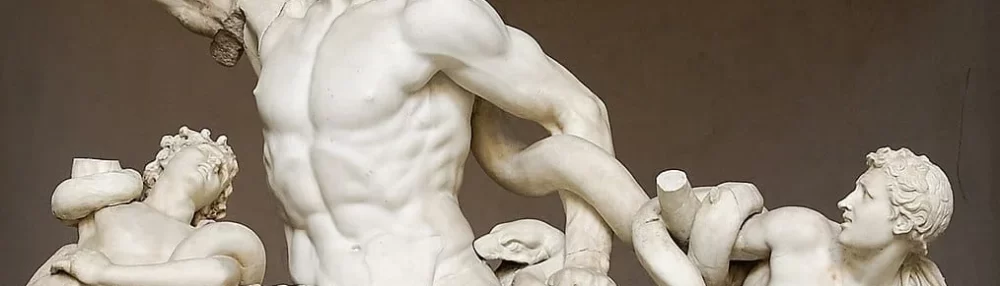
This course examines key figures and works in literary and artistic traditions from the Ancient and Classical periods through the Middle Ages and Renaissance, concluding with the Enlightenment and Romanticism. Throughout the semester we will explore how art expresses cultural ideals and social hierarchies, as well as how evolving aesthetic standards have shaped conventions in literature and the arts. Coursework and assignments include learning trips to various sites of historical and cultural significance in and around the Boston area to emphasize the Humanities’ relevance beyond the classroom. This course fulfills a single unit in each of the following BU Hub areas: Aesthetic Exploration, Historical Consciousness, Critical Thinking.
Course Rules
Plagiarism is a very serious offense in this course, at CGS, and in the wider BU community. If you’re short on time, better that you ask for an extension than fail the assignment or (worse) get suspended.
Generative AI is not permitted. Honing your creative, analytical, and critical thinking skills is one of the learning outcomes of HU103, and developing strong competencies in these areas will prepare you for a competitive workplace. Students may not use ChatGPT, Grammarly Pro, translation software, or any other AI language generating programs for any part of class work—unless explicitly directed by a Professor for research purposes. Students may not use these programs to write and/or edit assignments, or to summarize readings. Therefore, students must be the sole authors of assignments they turn in for this class and must take responsibility for the information and ideas contained in their work. In practice, authorship means understanding the implications of your words and being able to explain your reasoning. It also means having read sources you cite and being able to talk intelligently about them. Students should be prepared to discuss their submitted work and their sources in detail.
Respect me and your fellow students during class. Keep your laptop closed and your eyes on whoever’s talking—or on the text we’re talking about. Focus on people are saying and join in the discussion with insights or questions of your own.
Attendance will be taken at every lecture and discussion section. If you know that you’re going to miss a class meeting, please let me know—I always appreciate a heads-up! Accruing more than three absences during the semester will affect your final grade for the course. A student with five or more absences risks failing the course, even if all other course requirements have been satisfied.
Course Materials
Available at the BU Bookstore (link to purchase):
- The Epic of Gilgamesh, tr. Gerald Davis. Pub: CreateSpace.
- Euripedes, Medea, tr. Robertson. Pub: Free Press.
- Plato, Symposium, tr. Nehamas. Pub: Hackett.
- William Shakespeare, The Tempest, Signet Classics edition.
- Voltaire, Candide, tr. Bair. Pub: Penguin Random House.
- Carol Strickland, The Annotated Mona Lisa, Pub: Andrews McMeel, 3d Ed.
Additional readings will be posted on on the course Blackboard page.
Grading
Grade Weighting as follows, weights out of 100 total:
- Midterm (combined short answer & essay format) 20
- Final Exam (combined short answer & essay format) 20
- Essay 1 (4-5 p) 15
- Essay 2 (4-5 p) 15
- Interdisciplinary Reflection 1 (1-2 p) 5
- HW Responses (½ p, twice weekly) 15
- Class Participation 10
Attendance penalties, as noted in the Course Rules, above.
Participation
Active participation includes speaking up in class (but not dominating the conversation), attending office hours, volunteering to read aloud, & taking an active role in group activities. Unauthorized use of electronics (cell phone, computer, etc.), tardiness, disruptive behavior, forgetting to bring assigned readings, or lack of alertness will adversely affect your class participation.
HUB Capacities
Humanities 103 is designed to achieve the following learning outcomes, per the BU HUB.
Aesthetic Exploration:
- By surveying more than two millennia of art and literature, this course introduces students to various modes of aesthetic exploration. In their homework, essays and exams, students will demonstrate both knowledge and appreciation of notable works of art and literature, including the cultural contexts in which those works were created, and will ponder their ongoing relevance.
- Through tests, written assignments, and in-class discussions, students will demonstrate the reasoning skills and vocabulary necessary to interpret works of art and literature.
- In class discussion and in their written work, students will evaluate and analyze a wide range of genres, modes and styles: epic, tragic, lyric and satiric literature; religious, allegorical and mimetic representation; and visual media from sculpture to painting to film.
Historical Consciousness:
- Students will learn to understand and evaluate artworks in their respective historical and cultural contexts. They will learn to use historical evidence in evaluating interpretations of artworks.
- Through exams, writing assignments, and in-class discussions, students will demonstrate an ability to interpret primary source material (textual, visual, or aural) using a range of interpretive skills and situating the material in its historical and cultural context.
- In surveying specific periods in the history of literature and the arts, students will demonstrate knowledge of various philosophical and religious traditions, intellectual paradigms, forms of political organization, and socio-economic forces. They will thereby learn how these have changed over time.
Critical Thinking:
- Students will be able to analyze various forms of argumentation and interpretation when learning to understand and evaluate artworks. They will identify key elements of critical thinking, including habits of distinguishing deductive from inductive modes of inference and recognizing common logical fallacies and cognitive biases. Students will learn to distinguish empirical claims about matters of fact from normative or evaluative judgments. Students will learn to apply theories and principles in interpreting and evaluating various artworks.
- Drawing on skills developed in class, students will be able to evaluate the validity of arguments and interpretations, including their own. Students will learn key concepts that cultivate critical thinking and rational discourse. They will also recognize the ways in which thinking about art may be shaped by values, moral character, and emotional responses.